Delivery Exception Intelligence for a Regional 3PL
Client: Regional third-party logistics (3PL) operator · Scale: 400+ daily shipments
400+ daily shipments, 90-minute breach discovery, zero manual pull from day one.
CLIENT PROBLEM
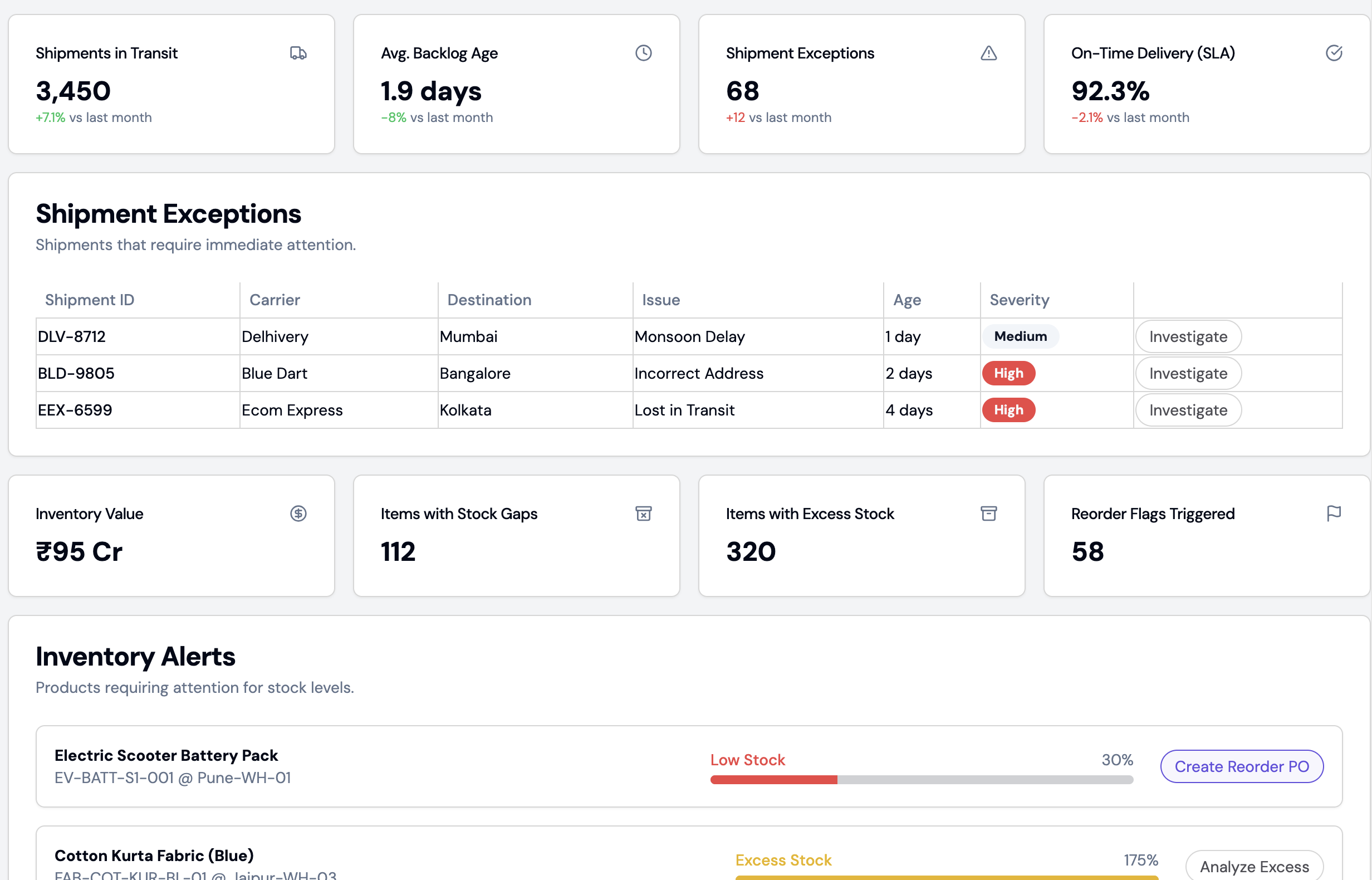
A regional 3PL managing 400+ daily shipments had its operational data split across three systems that never talked to each other: delivery status and proof-of-delivery logs in a transport management system, live vehicle location and ETA estimates in a GPS telematics platform, and customer SLA window commitments stored in a contract database. When a shipment ran late, the first signal was typically a customer escalation — not an internal alert. Every morning, two ops managers spent two hours pulling TMS exports, cross-referencing GPS logs, and manually comparing each shipment against its contracted delivery window. By the time the report was ready, many of the exceptions it described were already resolved, compounded, or on their way to becoming formal SLA penalties.
OUR SOLUTION & ARCHITECTURE
Connected read-only to the TMS, telematics platform, and SLA contract database in a single setup session. The Knowledge Base was configured with delivery window definitions, carrier deviation thresholds, and customer tier escalation rules — written in plain language by the ops lead, not an engineer. Autonmis then ran continuous cross-source evaluation: comparing live ETA estimates from telematics against contracted delivery windows from the SLA database, and flagging shipments that were trending toward breach before they crossed the threshold.
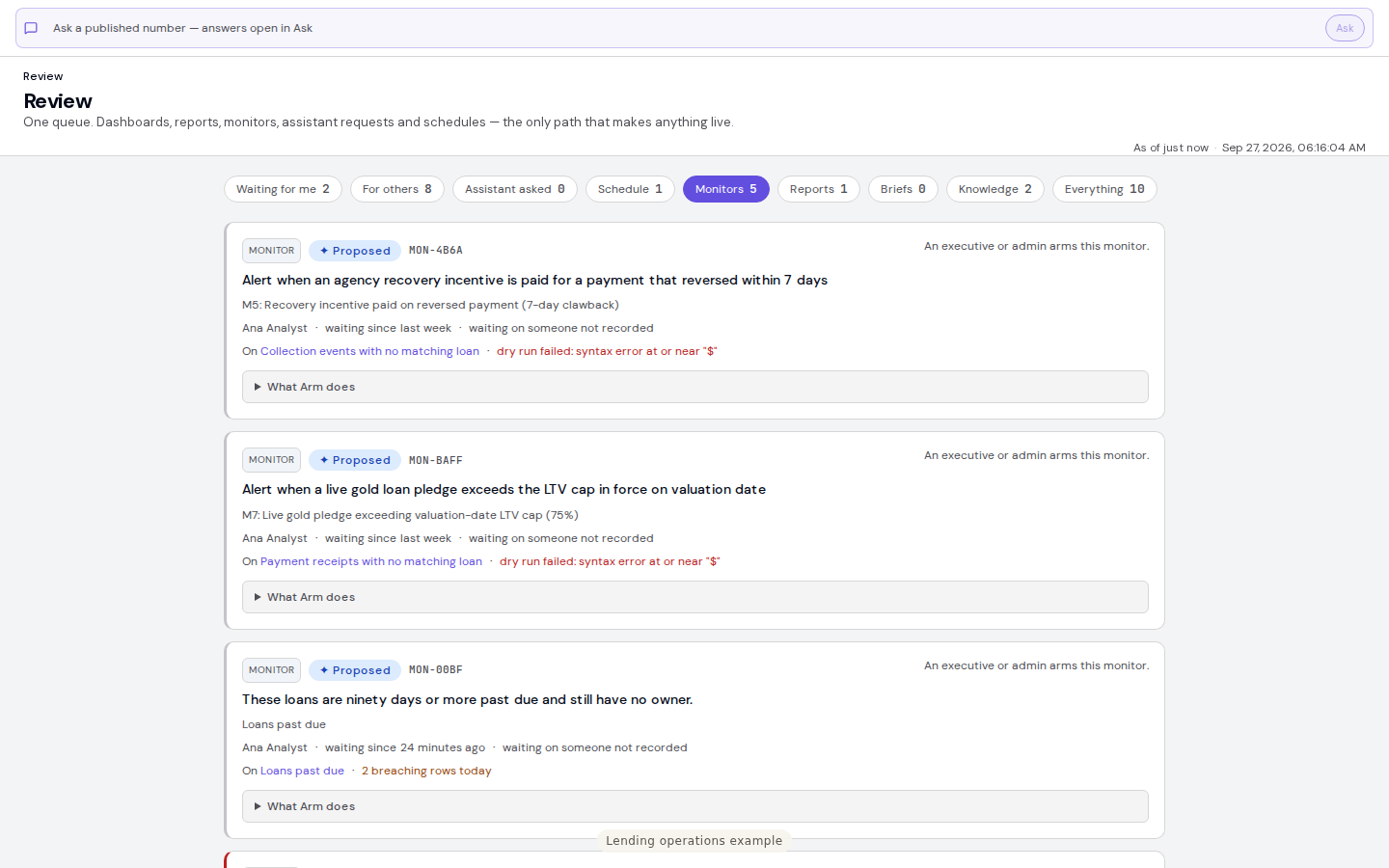
Exception alerts routed to the relevant account manager with full context — shipment ID, current ETA, contracted window, and minutes to breach. A structured morning brief covered overnight exceptions, sorted by severity and customer tier. The manual export process was retired on day one of go-live. The workflow went from initial scoping to production in 16 days, with zero engineering involvement after source connection.
SYSTEM TOPOLOGY
TMS Dispatch
Shipment state logs
GPS Telematics
Live ETA coordinates
SLA Contract DB
Tiered window rules
Breach Predictor
Continuous compare
AM Escalation
<90 min discovery
WHY IT MATTERS & SYSTEM MECHANICS
- Trigger
- A shipment's live ETA trends toward its contracted delivery window, before the breach actually occurs.
- Sources
- Transport management system (delivery status) · GPS telematics platform (live ETA) · SLA contract database (delivery-window commitments)
- Human Loop
- Account manager owns all customer communication and remediation on a flagged shipment — the platform routes and contextualizes, nothing is auto-communicated to the customer.
- Three systems, no cross-check.
- Delivery status lived in the TMS, live location and ETA in the GPS telematics platform, and SLA windows in the contract database — nothing compared them to each other automatically.
- Detection depended on the customer noticing first.
- An internal alert rarely arrived before the customer's escalation call did.
BENEFITS REALISED
- T+18 hours → under 90 minutes
SLA breach discovery lag
Previously discovered when a customer escalated or at morning review
- 2 hours → zero
Daily morning exception report prep
Two ops managers freed from manual TMS pull and cross-reference
- 16 days
Time to first live exception alert
From initial source connection to production monitoring
- 400+ shipments
Monitored continuously across three sources
No manual sampling — every shipment evaluated on every run
- Zero
Engineering dependency for ongoing operation
Ops team manages rules, thresholds, and escalation logic independently
Every deviation threshold here — what counts as 'trending toward breach' for a given customer tier — is a rule the ops lead set in the Knowledge Base, not a hardcoded default; change the tier definition and every future evaluation uses it.
DEPLOY ON YOUR INFRASTRUCTURE
Scope a 14-day pilot on your production exports.
Read-only connections, deterministic rules, and a working system in under three weeks.
MORE CLIENT BUILDS
Explore other deployments
Collections Exception Intelligence
A mid-market NBFC eliminated 90 minutes of daily manual reconciliation and reduced exception discovery lag from 14 hours to under 2 minutes.
Campaign ROI Intelligence for Multi-Location Operators
A large franchise operator replaced weekly manual campaign reporting with a live cross-source dashboard — from raw sources to executive brief in 21 days.
Automated Quality Governance for AI Training Data
A voice data operation replaced manual QC review with a 7-stage automated evaluation pipeline — routing 11 submissions per evaluator-hour, with full audit provenance for every decision.
Composite deployment example. The workflow architecture reflects real production implementations; client names are anonymized under NDA.