Collections Exception Intelligence
Client: Mid-market NBFC, consumer lending · Scale: 12,000 active loan accounts
12,000 accounts, one exception brief, zero engineering after week one.
CLIENT PROBLEM
An NBFC managing 12,000 active loan accounts had its operational data split across three systems: loan disbursement and account metadata in a data warehouse, active collections cases in an operational database, and weekly mandate status files uploaded from their banking partner to S3. Nobody was watching all three simultaneously. Every morning, two analysts spent 90 minutes pulling exports, running VLOOKUPs, and building a reconciliation sheet to identify which accounts had missed mandates, which were approaching DPD thresholds, and which were already in breach. Exceptions were discovered an average of 14 hours after they occurred.
OUR SOLUTION & ARCHITECTURE
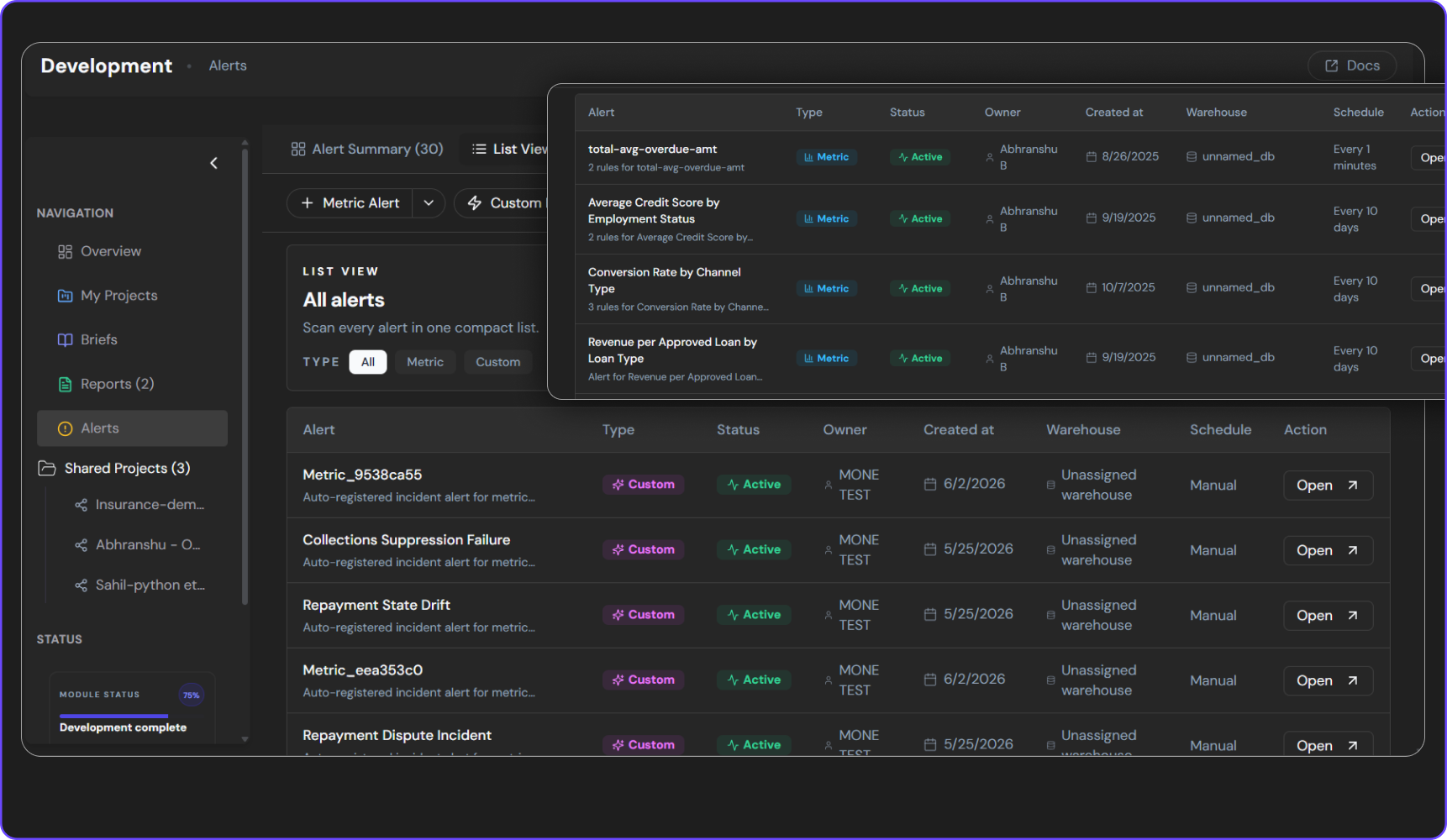
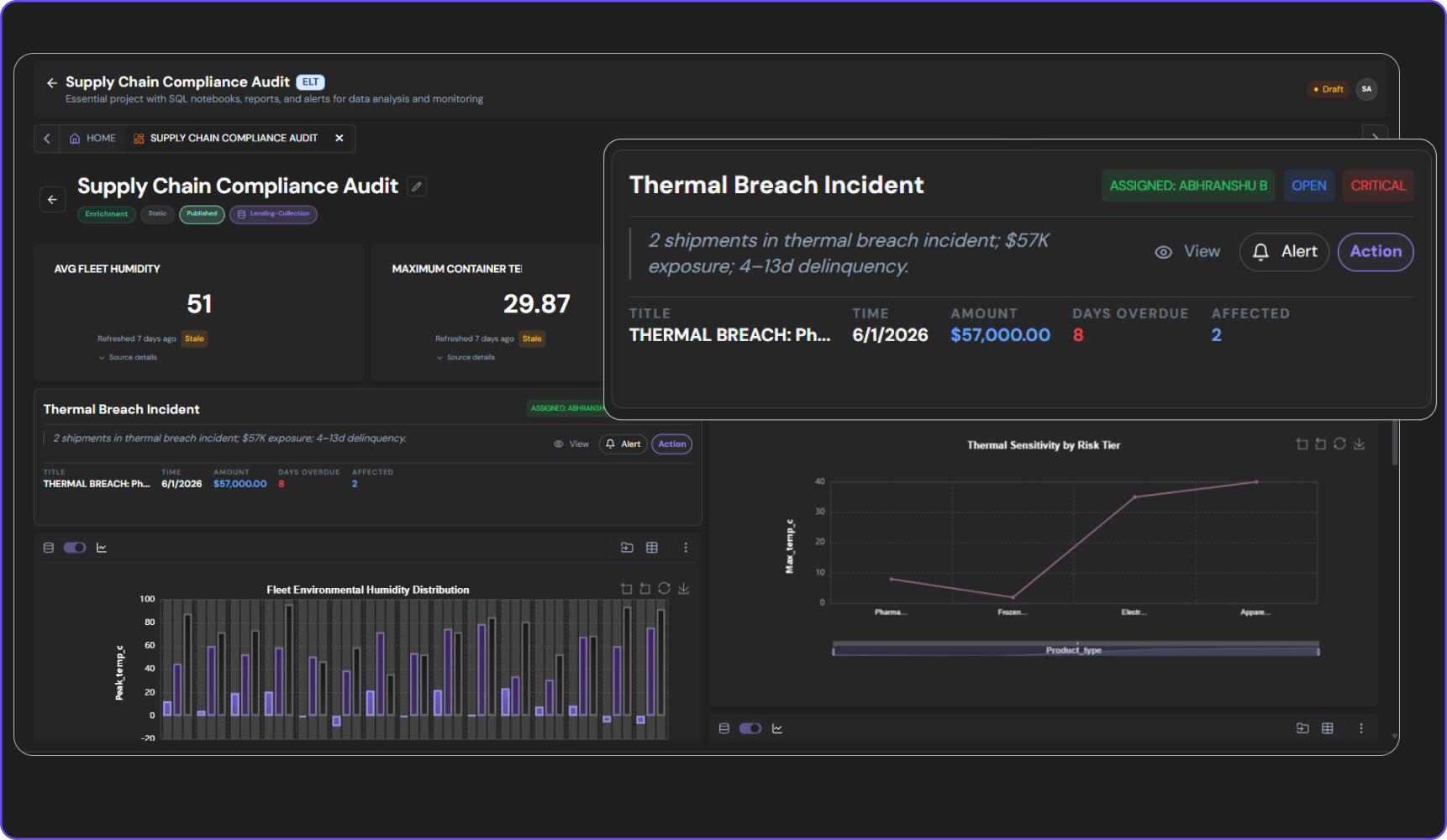
Connected read-only to all three sources in a single session. The Knowledge Base was configured with SLA definitions, DPD threshold rules, and mandate bounce classification logic — in plain language, no SQL required. Autonmis then ran automated cross-source reasoning on a schedule, evaluating every account against its SLA tier, detecting mandate failures as they arrived, and delivering a structured exception brief to the ops lead's Slack at 6am every morning. Real-time threshold alerts fired during the day when a breach occurred — before anyone escalated.
The workflow went from draft to production in 18 days. No engineering involvement after initial data source connection.
SYSTEM TOPOLOGY
LMS & Bureau DB
12,000 loan accounts
Bank NACH Feed
Bounce & clearing sync
DPD Rule Engine
Risk & exposure weights
Exception Router
Branch & agent split
6am Recovery List
2-min discovery lag
WHY IT MATTERS & SYSTEM MECHANICS
- Trigger
- A mandate bounce is recorded in the banking-partner file, or an account crosses a configured DPD threshold in the operational database.
- Sources
- Data warehouse (loan/account metadata) · Operational database (collections cases) · Banking-partner S3 file (mandate status)
- Human Loop
- Ops lead reviews the 6am brief and initiates outreach on flagged accounts; escalation to legal/recovery requires ops sign-off once an account crosses the highest DPD tier.
- Three systems, no shared view.
- Loan and account data lived in the warehouse, live collections cases in the operational database, and mandate status arrived as a weekly file from the banking partner — nobody was checking all three against each other on any given day.
- A fixed cost before any real work started.
- Two analysts spent 90 minutes every morning exporting, running VLOOKUPs, and rebuilding the same reconciliation sheet — regardless of how many real exceptions existed that day.
BENEFITS REALISED
- 14 hours → under 2 minutes
Exception discovery lag
Previously discovered when a client escalated
- 90 minutes → zero
Daily analyst time on reconciliation
Two analysts freed from daily export + VLOOKUP
- Eliminated entirely
Manual reconciliation process
Cross-source check now runs automatically
- 18 days
Time to first live workflow
From zero to production exception alerts
- None
Engineering dependency for ongoing operation
Ops team runs it independently
Every threshold in this workflow runs against the DPD and mandate-bounce logic the ops team defined in the Knowledge Base — not a generic guess at what 'overdue' means.
DEPLOY ON YOUR INFRASTRUCTURE
Scope a 14-day pilot on your production exports.
Read-only connections, deterministic rules, and a working system in under three weeks.
MORE CLIENT BUILDS
Explore other deployments
Campaign ROI Intelligence for Multi-Location Operators
A large franchise operator replaced weekly manual campaign reporting with a live cross-source dashboard — from raw sources to executive brief in 21 days.
Automated Quality Governance for AI Training Data
A voice data operation replaced manual QC review with a 7-stage automated evaluation pipeline — routing 11 submissions per evaluator-hour, with full audit provenance for every decision.
Clinical Operations Exception Monitoring
A healthcare operations team reduced SLA breach detection from T+48 hours to T+2 hours — without a single engineering sprint after initial setup.
Composite deployment example. The workflow architecture reflects real production implementations; client names are anonymized under NDA.