Clinical Operations Exception Monitoring
Client: Multi-site healthcare operations team · Scale: Multi-site clinical network, tiered SLA commitments
Multi-site clinical network, T+2h breach detection, zero engineering after setup.
CLIENT PROBLEM
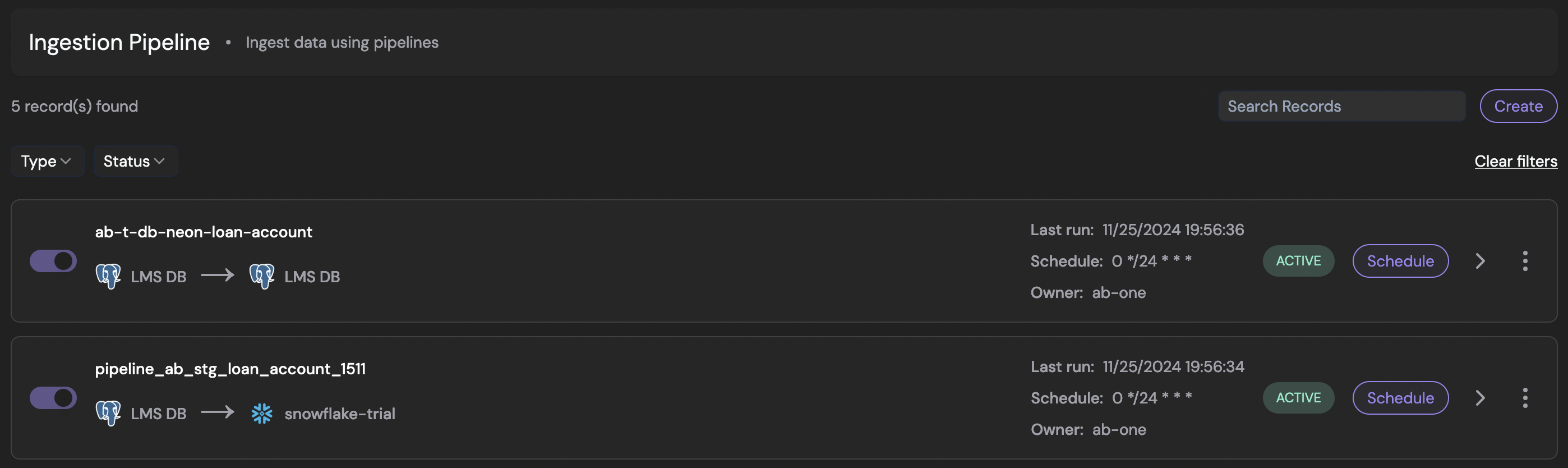
A healthcare operations team managing clinical site performance had patient encounter data in one system, site SLA commitments tracked in a separate database, and weekly compliance reports uploaded as files by site coordinators. There was no unified view. SLA breaches — delayed reports, missed documentation windows, threshold crossings — were typically discovered during the weekly review call, 48–72 hours after they occurred. Compliance management required a traceable chain from detected exception to documented resolution, which manual processes could not reliably provide.
OUR SOLUTION & ARCHITECTURE
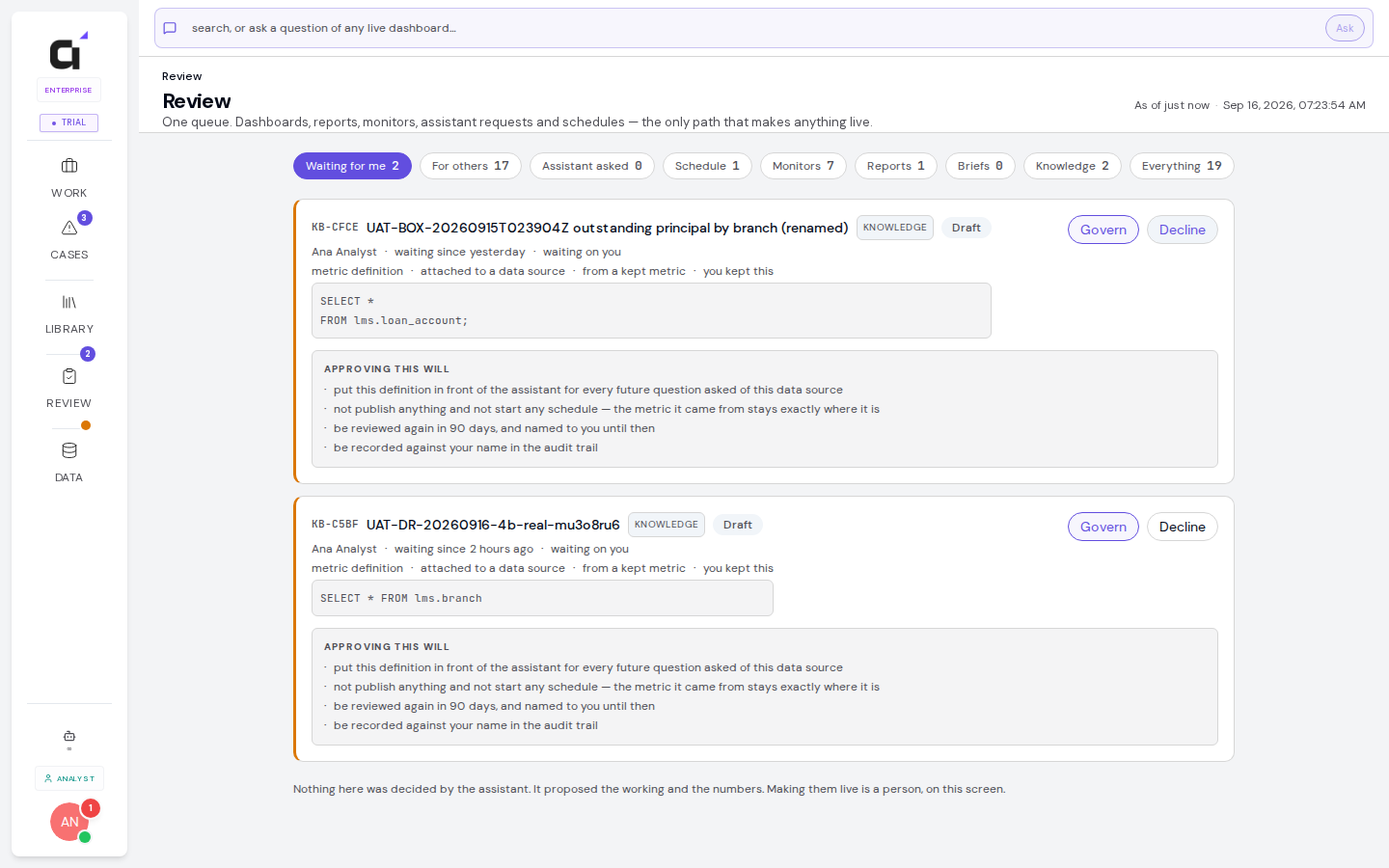
Connected to all three source types. The Knowledge Base was configured with SLA definitions, documentation window rules, and escalation thresholds specific to each site tier. Autonmis ran automated cross-source evaluation on a schedule, comparing actual site performance against contracted SLA thresholds and flagging exceptions before they became compliance events. Exception briefs were delivered to the ops lead each morning. When a threshold crossing occurred during the day, a Slack alert fired with the site, the specific SLA dimension, and the time elapsed since the breach. The lifecycle governance layer — draft → review → approved on every published analysis — meant every exception report that reached a compliance officer had been formally reviewed and promoted.
SYSTEM TOPOLOGY
CTMS & Site Logs
Visit & protocol feed
Claims & Policy DB
Pre-payout schedules
Protocol Matcher
Deviation detection
Compliance Queue
Evidence-linked review
Audit Sign-Off
Immutable provenance
WHY IT MATTERS & SYSTEM MECHANICS
- Trigger
- A site's actual performance crosses a contracted SLA threshold for its tier — a missed documentation window or an escalation-level deviation.
- Sources
- Patient encounter system · SLA commitment database · Site-coordinator compliance file uploads
- Human Loop
- Every exception report moves through a draft → review → approved lifecycle before it reaches a compliance officer; ops lead handles same-day triage from the morning brief.
- Three sources, no shared review.
- Patient encounter data, SLA commitments, and weekly compliance uploads from site coordinators were tracked separately, with nothing checking them against each other in real time.
- The weekly call was the only detection point.
- A breach that happened the day after the call sat unflagged for up to a full week — not just the 48–72 hours the average implied.
BENEFITS REALISED
- T+48 hours → T+2 hours
SLA breach detection
Previously found at weekly review call
- ~70% reduction
Weekly compliance prep time
Exception reports generated and reviewed automatically
- Day one
Traceable exception-to-resolution chain established
Every breach has documented detection and resolution
- Zero
Engineering dependency post-setup
Ops team manages rules and thresholds independently
- 19 days
Time to first live exception alert
From initial source connection to production monitoring
No exception report reaches a compliance officer unreviewed — every one moves through the same draft-to-approved promotion path a published dashboard does, so the audit trail behind a single flagged breach is as complete as the one behind a metric an executive sees.
DEPLOY ON YOUR INFRASTRUCTURE
Scope a 14-day pilot on your production exports.
Read-only connections, deterministic rules, and a working system in under three weeks.
MORE CLIENT BUILDS
Explore other deployments
Collections Exception Intelligence
A mid-market NBFC eliminated 90 minutes of daily manual reconciliation and reduced exception discovery lag from 14 hours to under 2 minutes.
Campaign ROI Intelligence for Multi-Location Operators
A large franchise operator replaced weekly manual campaign reporting with a live cross-source dashboard — from raw sources to executive brief in 21 days.
Automated Quality Governance for AI Training Data
A voice data operation replaced manual QC review with a 7-stage automated evaluation pipeline — routing 11 submissions per evaluator-hour, with full audit provenance for every decision.
Composite deployment example. The workflow architecture reflects real production implementations; client names are anonymized under NDA.